Why Good Design Builds Trust
Good design is more than visual appeal. It helps brands communicate clearly, create consistent experiences, and build confidence from the very first interaction. Discover how thoughtful design can strengthen credibility and turn first-time visitors into loyal customers.
By Admin
July 21, 2026
4 min read
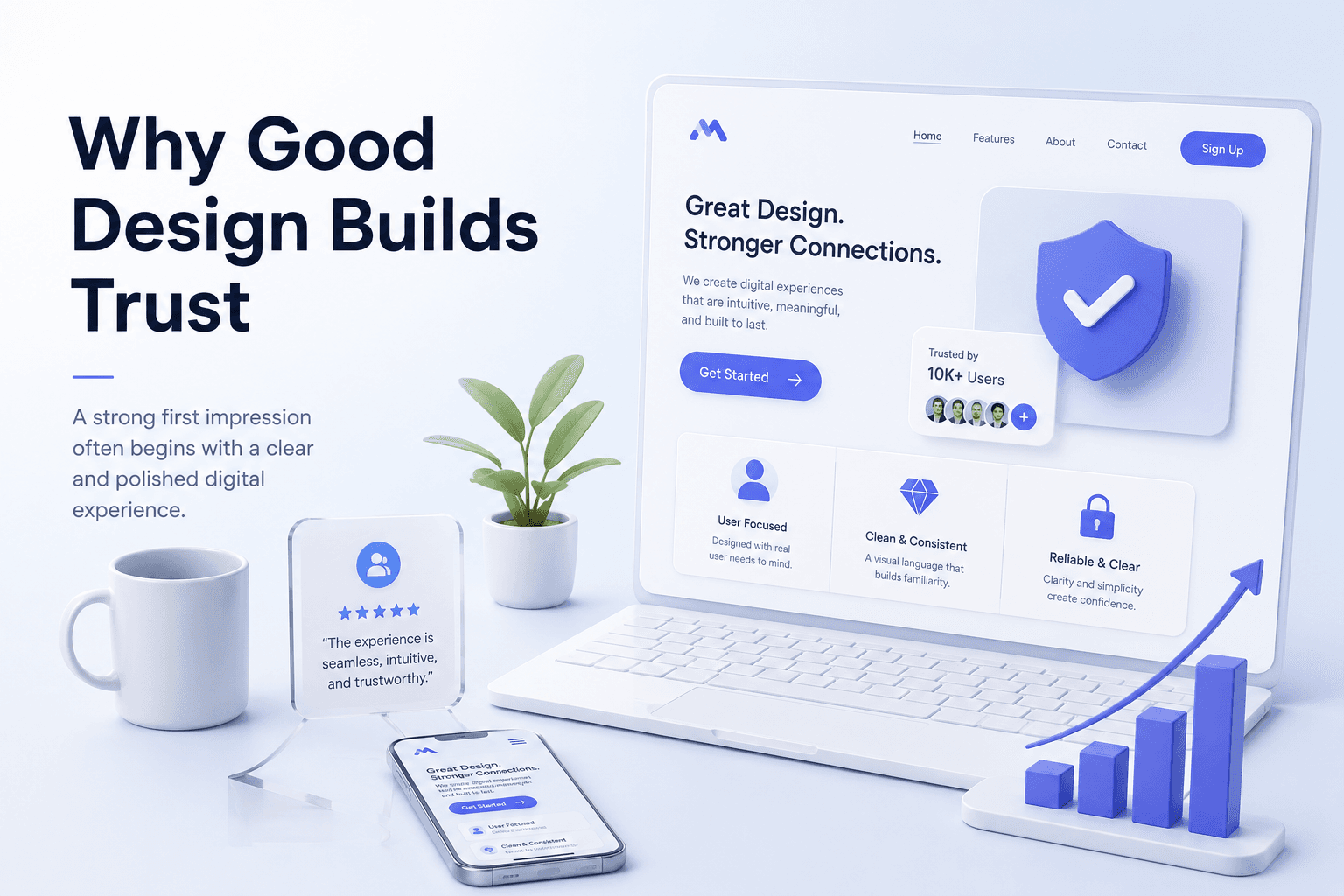
A strong first impression often begins with a clear and polished digital experience.

People often form an opinion about a brand before they fully understand its products or services. They notice the website, colors, typography, images, and how easy the information is to understand. When these elements feel clear and professional, people are more likely to trust the business behind them.
In this article, we will explain how good design helps brands build credibility, create better experiences, and develop stronger relationships with their audience.
What Does Trust Mean in Design?
I have trust in design, which is the feeling of confidence people experience when interacting with a brand, website, or digital product through design.
A trustworthy design usually feels:
- Clear and easy to understand
- Professional and consistent
- Safe to interact with
- Relevant to the audience
- Reliable across different platforms
Good design does not build trust through decoration alone.
Therefore, good design builds trust by helping people understand what the brand offers, where they can find important or needed information, and what action they should take next.
Why Does Good Design Build Trust?
Good design supports trust in several important ways.
1. It Creates a Strong First Impression
A website or digital product is often the first interaction someone has with a business.
When the layout looks outdated, crowded, or unorganized, visitors may question the quality of the company behind it.
A polished design can communicate:
- Attention to detail
- Professionalism
- Business credibility
- Clear brand direction
Even simple improvements in typography, spacing, and visual hierarchy can make a brand feel more established.
A strong first impression encourages visitors to stay longer and learn more about the business.
2. It Makes Information Easier to Understand
People are more likely to trust experiences they can understand.
When users visit a website, they should quickly know:
- What the company offers
- Who the product or service is for
- What benefits they will receive
- What they should do next
Good design organizes information based on importance.
Headings, buttons, images, sections, and white space help guide users through the content without making them feel overwhelmed.
When information is easy to find, the experience feels more reliable.
Clear structure and visual hierarchy make information easier to understand.

3. It Creates Consistency
Consistency helps people recognize and remember a brand.
A consistent visual identity includes:
- The same color palette
- Clear typography rules
- Similar image styles
- Reusable interface components
- A consistent tone of voice
When every page looks and feels connected, the brand appears more organized.
Without consistency, a website may feel disconnected. Different pages can look like they belong to different companies, which may create confusion.
A design system helps teams maintain consistency as the business grows.
4. It Shows Attention to Detail
Small design details can have a major impact on how professional a brand feels.
These details may include:
- Balanced spacing
- Clear button labels
- Sharp and high-quality images
- Readable font sizes
- Proper alignment
- Smooth interactions
People may not consciously notice every design decision, but they can often feel when something is wrong.
Broken layouts, blurry images, or inconsistent buttons can make users question the quality of the product or service.
Thoughtful details show that the business cares about the customer experience.
5. It Makes Digital Experiences Feel Safer
Trust is especially important when users need to share information, create an account, or complete a payment.
A professional interface can make these actions feel safer.
Trustworthy digital experiences usually include:
- Clear form labels
- Visible privacy information
- Simple payment steps
- Easy-to-understand error messages
- Confirmation after an action is completed
Users should always know what is happening and what will happen next. When a process feels confusing or unpredictable, people may leave before completing it.
6. It Shows That the Brand Understands Its Users
User-centered design focuses on the needs, expectations, and behaviors of the audience.
It considers how people navigate a website, what information they need, and what problems they may experience.
User-centered decisions can include:
- Using readable text
- Providing clear navigation
- Creating accessible color contrast
- Reducing unnecessary steps
- Designing for mobile devices
- Writing helpful error messages
These choices show respect for the user’s time and effort.
When a brand makes an experience easier, it feels more helpful and dependable.
How Design Supports a Brand Promise
Every brand communicates a promise.
It may promise simplicity, innovation, speed, reliability, quality, or premium service.
Design helps prove that promise.
For example:
- A brand that promises simplicity should have a simple website.
- A technology company should provide a modern digital experience.
- A premium service should use refined visuals and polished interactions.
- A reliable business should communicate information clearly.
When the design supports the brand message, the business feels more authentic.
The visual identity, content, and user experience should communicate the same idea.
Common Design Problems That Reduce Trust
Several design problems can make a brand feel less credible.
These include:
- Too many colors or font styles
- Crowded layouts
- Confusing navigation
- Low-quality images
- Inconsistent buttons
- Long and difficult forms
- Unclear calls to action
- Poor mobile responsiveness
These problems do not always mean that the business is unprofessional.
However, users may still judge the business based on the experience they receive.
Fixing these issues can improve both trust and usability.
Final Thoughts
Good design is not only about making something look attractive.
It helps people understand a brand, navigate its products, and feel confident about taking the next step.
Trust is built through clarity, consistency, professionalism, and thoughtful user experiences.
When these elements work together, design becomes more than visual presentation.
It becomes an important part of the business strategy.
At Metamorph Lab, we create digital experiences that combine strong visual direction with clear, user-focused design.
From websites and mobile applications to branding and creative assets, every detail is designed to help brands communicate with confidence.
More articles
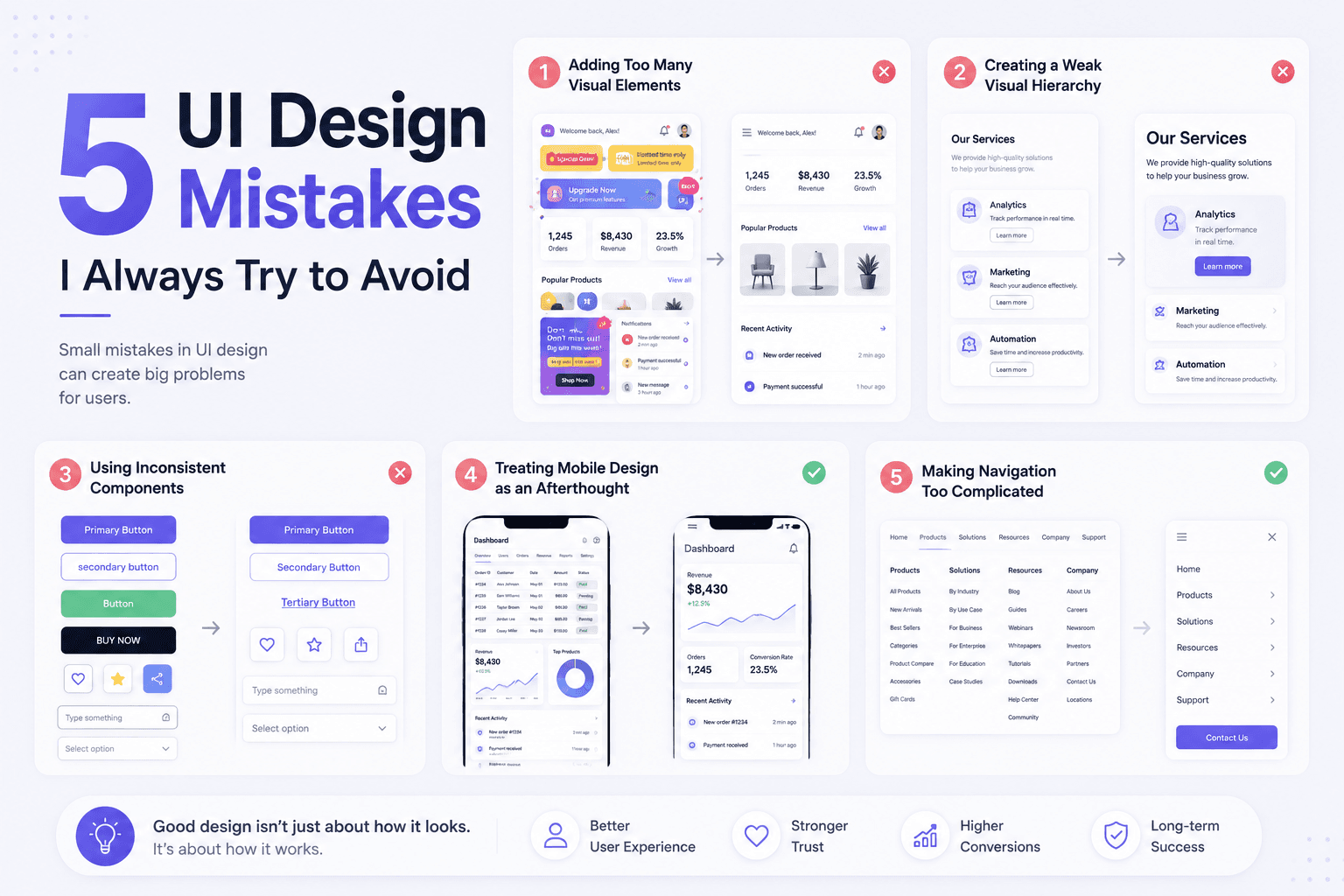
5 UI Design Mistakes I Always Try to Avoid
A beautiful interface is not always easy to use. Here are fi...
By Admin
UI vs UX: What is the Difference?
UI and UX are often mentioned together, but they focus on di...
By Admin

Where Is the Line Between Friendly and Inappropriate at Work?
Navigating workplace interactions can be tricky—what starts ...
By Admin

Toxic Work Culture Isn’t Always Obvious
Not all toxic work cultures are loud or obvious. Sometimes, ...
By Admin